
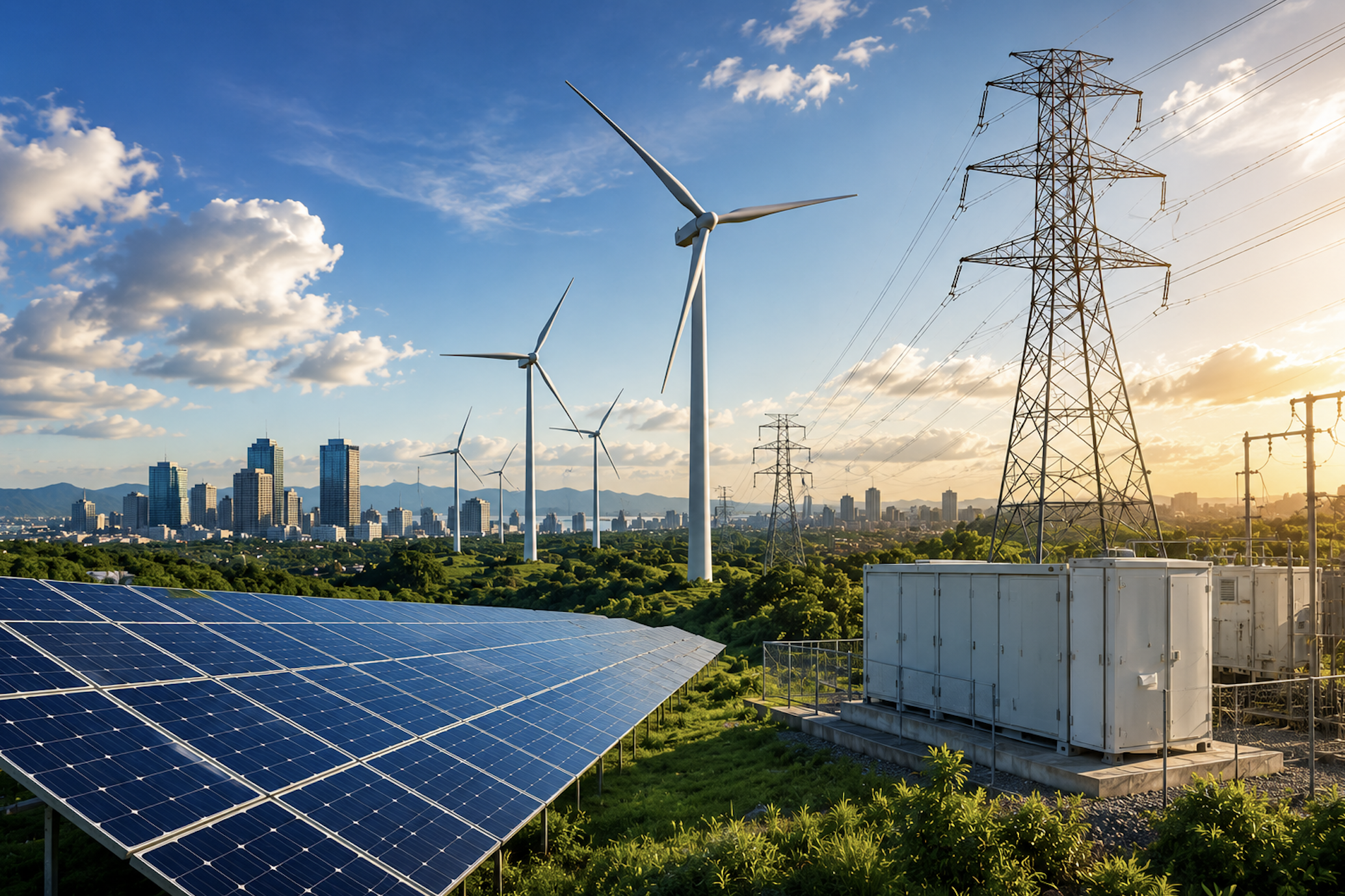
The Philippines will need to mobilize significant investments in renewable energy, grid integration and supporting infrastructure as it seeks to decarbonize its power sector while balancing energy security, affordability and sustainability, according to a policy paper by Congress’ research arm.
The Congressional Policy and Budget Research Department (CPBRD), in a discussion paper titled Renewable Energy Transition and the Costs of Decarbonization in the Philippines, said the country faces the challenge of pursuing a low-carbon energy transition despite contributing negligibly to global greenhouse gas emissions.
The paper said decarbonization in the Philippines requires a shift toward cleaner energy sources, particularly renewable energy, but the transition entails costs that need to be carefully managed.
“The transition to renewable energy entails significant upfront costs,” the report said, citing the need for investments in renewable energy generation, transmission networks, grid flexibility and energy storage systems.
The study comes as the Philippines targets increasing the share of renewable energy in the power generation mix to 35% by 2030 and 50% by 2040.
According to the CPBRD, the country’s energy transition must address the “energy trilemma” of affordability, reliability and sustainability while supporting economic growth.
The paper said the Philippines remains vulnerable to global fuel price volatility and fuel supply disruptions because of its dependence on imported fossil fuels.
Developing indigenous renewable energy resources such as solar, wind, hydropower, geothermal and biomass could help reduce that exposure and strengthen energy security, it said.
However, the report said expanding renewable energy capacity alone would not be sufficient.
“The integration of variable renewable energy sources requires investments in transmission networks, grid flexibility and energy storage systems,” it said.
The CPBRD said supportive policies would be needed to mobilize private sector investments, reduce risks and address barriers to renewable energy development.
These include maintaining a stable regulatory environment, improving access to financing, streamlining permitting processes and strengthening policy implementation.
The paper also highlighted the need for a “just transition,” saying the shift away from fossil fuels should take into account the social and economic impacts on affected workers and communities.
It said renewable energy development could generate national benefits, including reduced local air pollution, lower greenhouse gas emissions, new investments, technological innovation and job creation.
The findings come as the Philippines ramps up renewable energy development through the Green Energy Auction Program, foreign ownership liberalization in the renewable energy sector and initiatives designed to speed up strategic investments.
The CPBRD said careful policy planning and sustained investment would be needed to ensure that decarbonization supports energy security, economic resilience and long-term sustainability.
For the Philippines, the report said the renewable energy transition is not only an environmental objective but also part of a broader strategy to build a more secure, affordable and resilient energy system.