
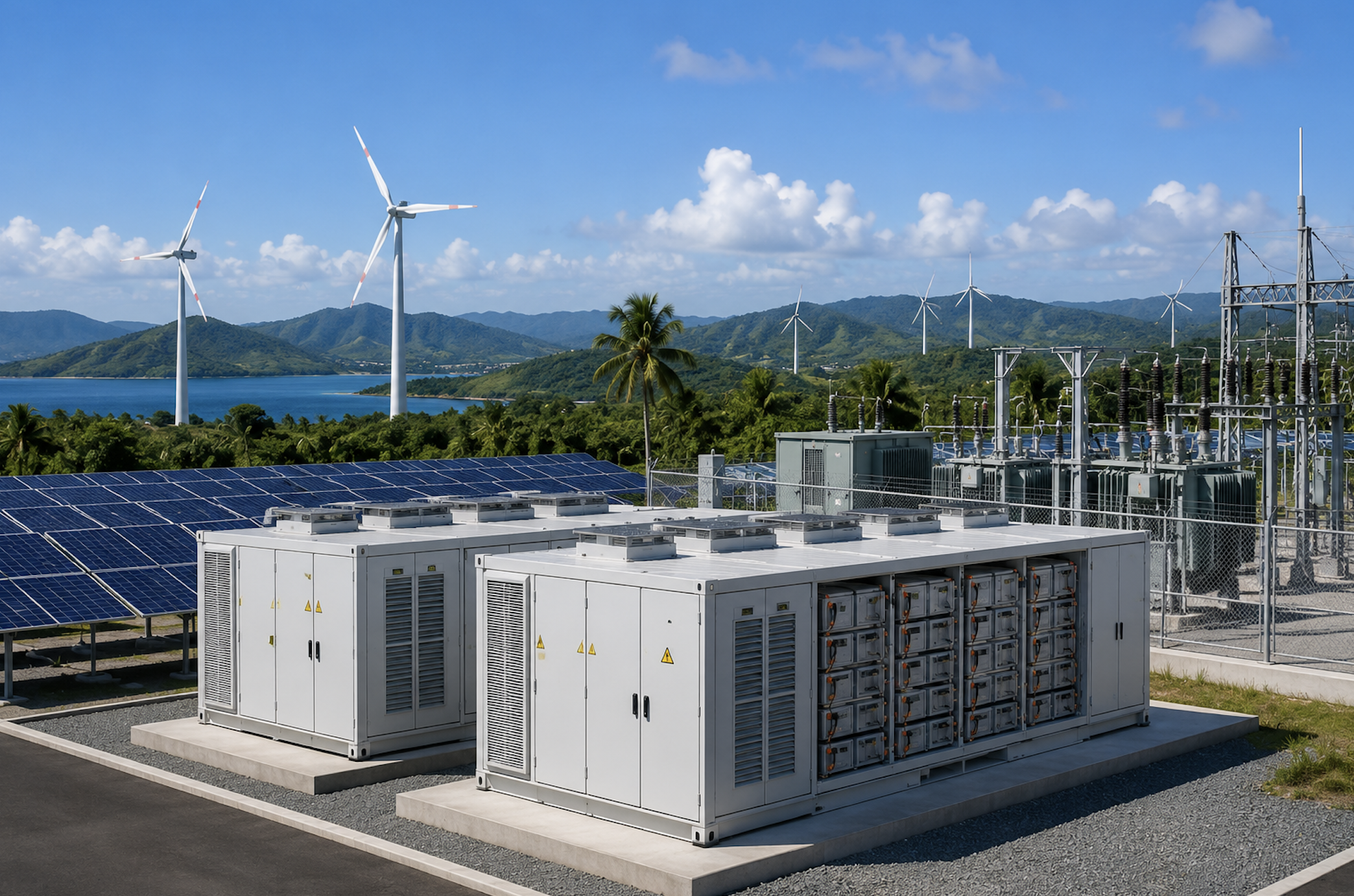
The Energy Regulatory Commission (ERC) has received 17 applications for battery energy storage system (BESS) projects across the Visayas and Mindanao as developers seek to improve grid reliability and support the integration of more renewable energy into the power system.
ERC Executive Director Nancy Aurora Q. Fajardo said the applications reflect growing demand for system flexibility as electricity consumption rises and renewable energy generation continues to expand outside Luzon.
“Today’s challenge is no longer simply supply adequacy, but system flexibility,” Fajardo said during Schneider Electric Philippines’ Innovation Day 2026 forum in Cebu.
Recent yellow and red alerts in the Visayas have underscored vulnerabilities in the power system despite generally adequate generation capacity, highlighting the need for additional reserve capacity, ancillary services, transmission upgrades and battery storage, she said.
Battery energy storage systems store excess electricity generated by renewable energy facilities and release it during periods of peak demand or supply disruptions, helping stabilize grid operations.
Electricity demand is rising across the Visayas and Mindanao as industrial parks, manufacturing facilities, data centers, logistics hubs and cold-storage operations expand, increasing the need for a more resilient and flexible power system.
The ERC is supporting the deployment of battery storage alongside renewable energy projects following a Department of Energy directive requiring new variable renewable energy projects with capacities of at least 10 megawatts to install battery storage equivalent to 20% of their installed capacity.
The commission is also revising the Philippine Grid Code to accommodate inverter-based technologies, including solar, wind and battery energy storage systems, which are increasingly relied upon for frequency regulation, voltage support and other grid services.
Fajardo said storage investments are becoming more critical as transmission constraints continue to limit the efficient delivery of electricity.
“Even sufficient generation may not be fully delivered or utilized because the grid may not yet have the capacity to carry it,” she said.
To address the issue, the ERC has approved additional revenues for the National Grid Corporation of the Philippines (NGCP) to finance grid modernization projects and transmission upgrades.
The regulator has also allowed private entities other than NGCP to finance and construct selected transmission facilities, a move intended to accelerate critical infrastructure projects and reduce delays.
As more renewable energy projects come online in the Visayas and Mindanao, the need for battery storage is expected to grow.
Earlier this year, Filinvest Development Corp. inaugurated its first utility-scale solar power plant in Misamis Oriental, a 20.74-megawatt facility expected to generate about 30.2 million kilowatt-hours of electricity annually.
“These investments show how renewable energy can strengthen energy security, support sustainability and enhance regional competitiveness,” Fajardo said. “More importantly, they signal growing investor confidence in Mindanao’s future as a destination for industry and innovation.”
She said battery storage, transmission expansion and microgrid development will be critical to maintaining grid reliability as the Visayas and Mindanao attract more renewable energy and industrial investments in the coming years.