
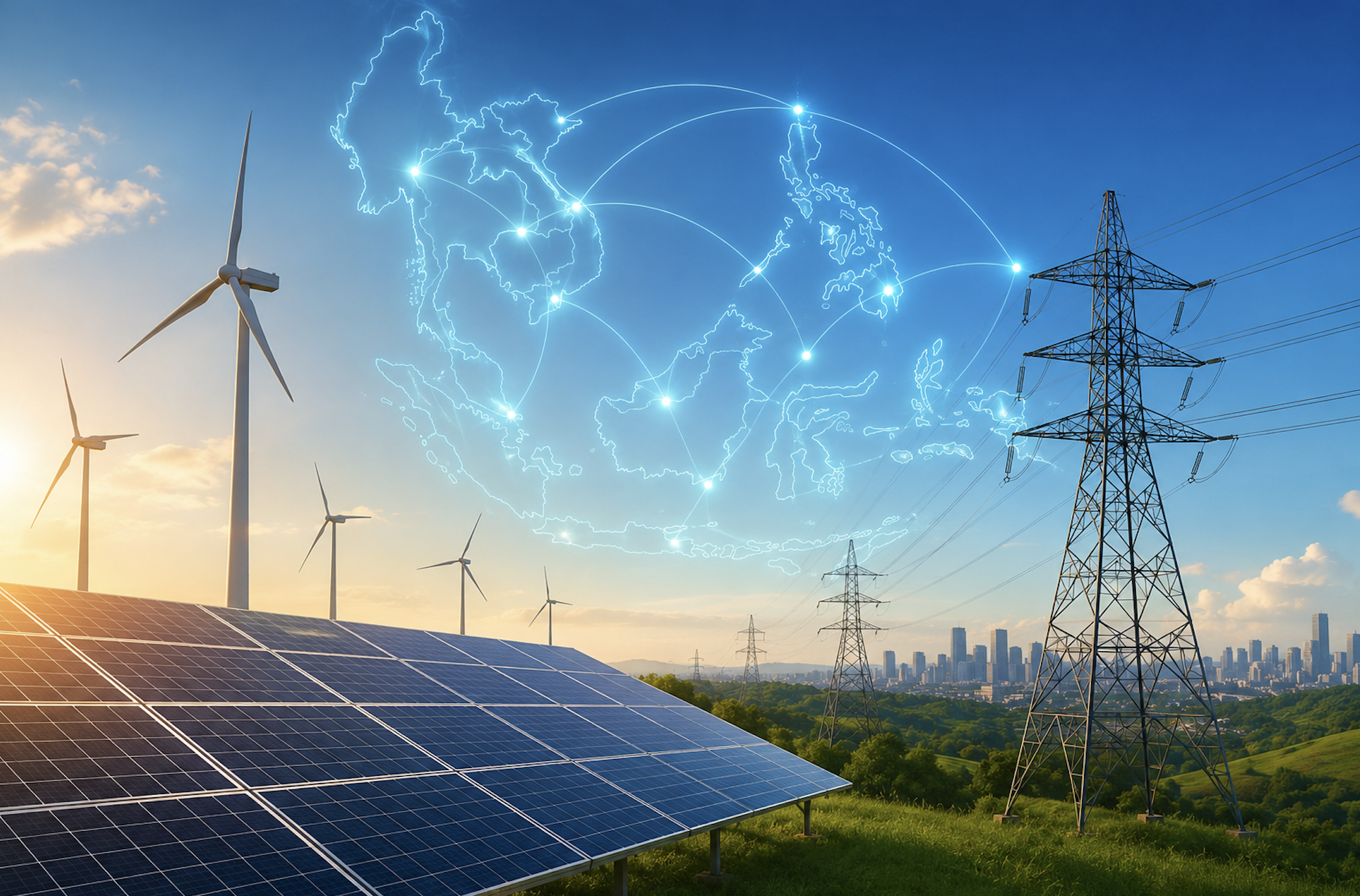
ASEAN energy officials reaffirmed their commitment to strengthening regional energy security and accelerating cross-border power connectivity, with the Philippines highlighting the role of regional grid integration in supporting wider renewable energy deployment across Southeast Asia.
The 44th ASEAN Senior Officials Meeting on Energy (SOME) and its associated meetings, held from June 15 to 18, brought together energy leaders from ASEAN member states, dialogue partners, and regional institutions to review progress on initiatives aimed at ensuring reliable, affordable, and sustainable energy supplies.
Among the key issues discussed was the continued development of the Enhanced ASEAN Power Grid, a regional initiative designed to improve electricity interconnection, support cross-border power trade, and help integrate renewable energy resources across ASEAN power systems.
The ASEAN Power Grid aims to connect electricity networks across Southeast Asia, allowing member states to trade power and improve system reliability.
The initiative is also seen as a key enabler for renewable energy integration by allowing countries to share surplus electricity generated from sources such as solar, wind, and hydropower.
Officials also reviewed the implementation of the ASEAN Framework Agreement on Petroleum Security, which seeks to strengthen emergency preparedness and safeguard energy supplies during disruptions.
Department of Energy Undersecretary Felix William B. Fuentebella, who chaired the meetings in his capacity as ASEAN Senior Officials Meeting on Energy chair, said closer cooperation would be critical as ASEAN economies face rising energy demand and external supply risks.
“As ASEAN’s demand for energy continues to grow and external risks evolve, we must work together to strengthen resilience, diversify supply, accelerate interconnection, and deepen partnerships that will secure our common energy future,” Fuentebella said.
The discussions come as Southeast Asian economies seek to balance growing power requirements with efforts to accelerate the energy transition.
Greater regional interconnection is expected to help improve grid reliability, reduce supply risks, and support the wider use of renewable energy in the region.
Officials also assessed progress on ASEAN’s broader energy cooperation agenda, emphasizing the need to translate regional commitments into concrete actions through timely implementation of national and regional programs.
The Philippines, which serves as ASEAN Chair for Energy Cooperation in 2026, reported that all eight of its Energy Sector Annual Priorities, as well as its Priority Economic Deliverable for the energy sector, remain on track.
Fuentebella said ASEAN’s energy transition must proceed in a way that supports economic growth while maintaining affordability and supply security.
“Energy security remains a fundamental pillar of ASEAN’s economic resilience and competitiveness. Our collective efforts must continue to focus on practical, implementation-oriented cooperation that delivers tangible benefits to our peoples and economies,” he said.
The Philippines is expected to host the 44th ASEAN Ministers on Energy Meeting in Manila in October, where member states will review progress on regional initiatives aimed at enhancing energy security, strengthening resilience, and supporting a secure, accessible, affordable, and sustainable energy future.