


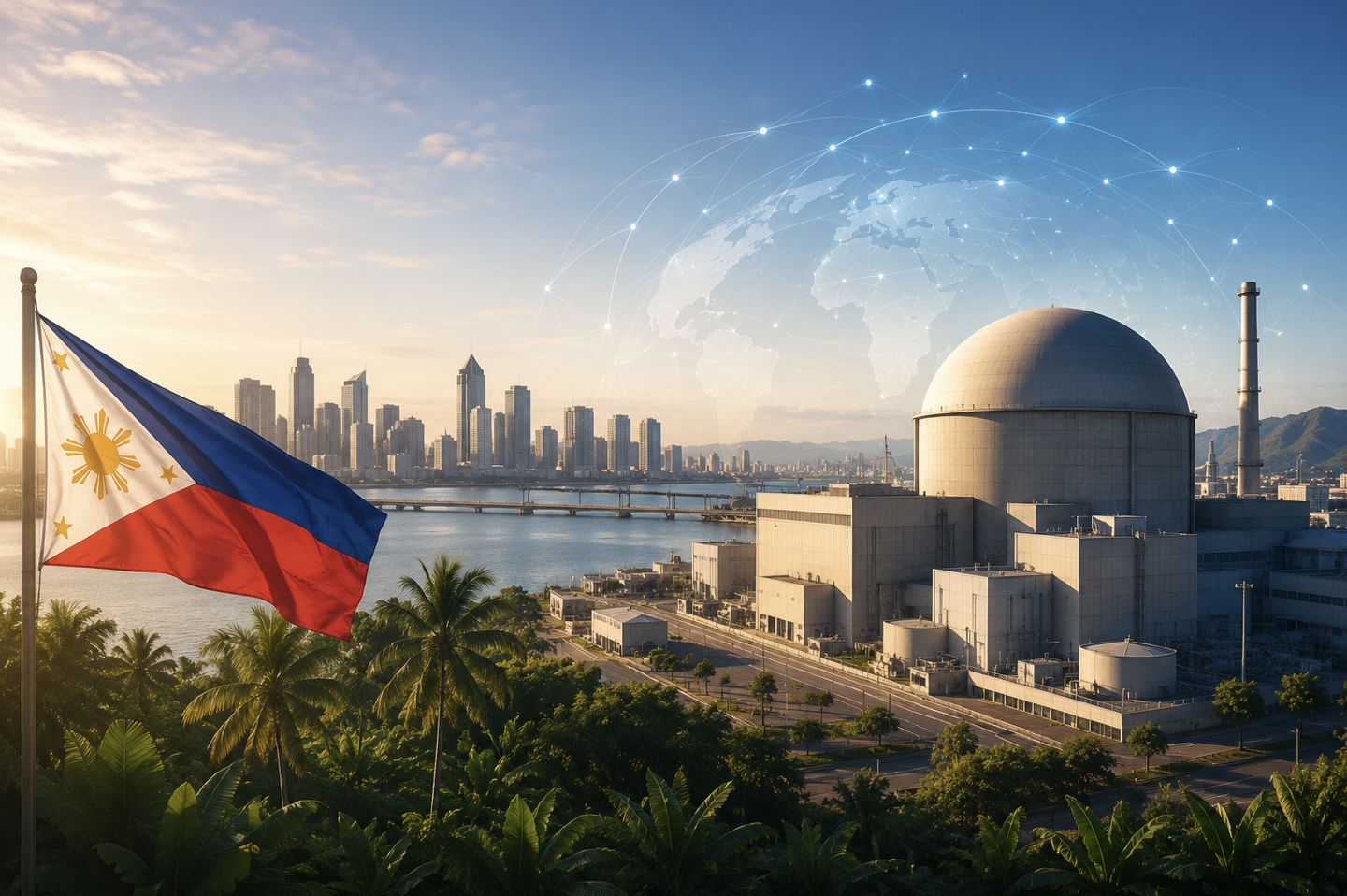
The Philippines will host the World Nuclear Supply Chain Conference 2026 and the Philippine International Nuclear Supply Chain Forum 2026 on October 20-21 after the Department of Energy (DOE) and the World Nuclear Association agreed to combine the two events into a single conference in Manila.
The integrated event, to be held at the Grand Hyatt Manila in Taguig City, is expected to bring together policymakers, regulators, utilities, reactor developers, engineering and construction firms, manufacturers, suppliers, financiers, research organisations and international institutions to discuss the future of nuclear energy supply chains and industrial cooperation across Southeast Asia.
Held during the Philippines’ chairmanship of the Association of Southeast Asian Nations (ASEAN), the conference is expected to serve as a platform for aligning government policy with industry needs, while promoting investment, localisation strategies, workforce development and supply chain readiness as countries in the region explore nuclear energy to strengthen energy security and reduce carbon emissions.
Although nuclear power is not classified as a renewable energy source, it is widely recognised as a low-carbon electricity technology and is increasingly being considered alongside renewable energy as countries pursue net-zero emissions, energy diversification and reliable baseload power generation.
“The expansion of nuclear energy will be delivered through strong regional partnerships and resilient global supply chains,” World Nuclear Association Director General Sama Bilbao y León said in a statement.
“By partnering with the Philippines Department of Energy, we are creating a single platform that brings international expertise together with ASEAN’s priorities for industrial development, clean energy and energy security. This partnership will help turn ambition into practical collaboration across the full nuclear value chain.”
Energy Secretary Sharon S. Garin said the partnership reflects the Philippines’ commitment to fostering regional cooperation as ASEAN countries evaluate nuclear energy to meet rising electricity demand.
“The Philippines is pleased to partner with World Nuclear Association to convene this integrated event in Manila,” Garin said.
“As ASEAN countries explore sustainable pathways to meet growing energy demand, cooperation on policy, skills, investment and supply chain capability will be essential. This forum will support constructive dialogue and practical partnerships that can help unlock opportunities for nuclear energy development in the Philippines, across ASEAN and beyond.”
The conference programme will focus on the practical requirements of developing nuclear programmes, including industrial readiness, vendor development, project delivery, financing, localisation strategies and ASEAN supply chain integration.
Dedicated business-to-business networking sessions are also expected to connect international suppliers with regional manufacturers, contractors and service providers.
The conference comes as the Philippines continues laying the groundwork for a potential nuclear energy programme through policy development, regulatory capacity building, workforce training and international cooperation.
The government has also been exploring both conventional nuclear technologies and small modular reactors as part of its long-term strategy to diversify the country’s energy mix.
According to the World Nuclear Association, the 2025 World Nuclear Supply Chain Conference in Poland attracted 310 delegates representing 196 companies from 27 countries, highlighting growing international collaboration as the industry prepares for significant expansion in new nuclear capacity, plant life extension projects and fuel cycle activities.
The association’s latest World Nuclear Outlook projects global nuclear generating capacity could reach 1,446 gigawatts by 2050, with around 50 countries expected to have nuclear power in operation by then.
It added that ASEAN accounts for nearly one-quarter of projected nuclear capacity among newcomer countries as governments in the region assess nuclear energy as part of long-term strategies for energy security, industrial development and decarbonisation.
The integrated conference is expected to strengthen the Philippines’ position as an emerging participant in the global nuclear industry while creating opportunities for local manufacturers, engineering firms and service providers to engage with international suppliers, technology developers and investors as the country advances preparations for future nuclear energy development.
