


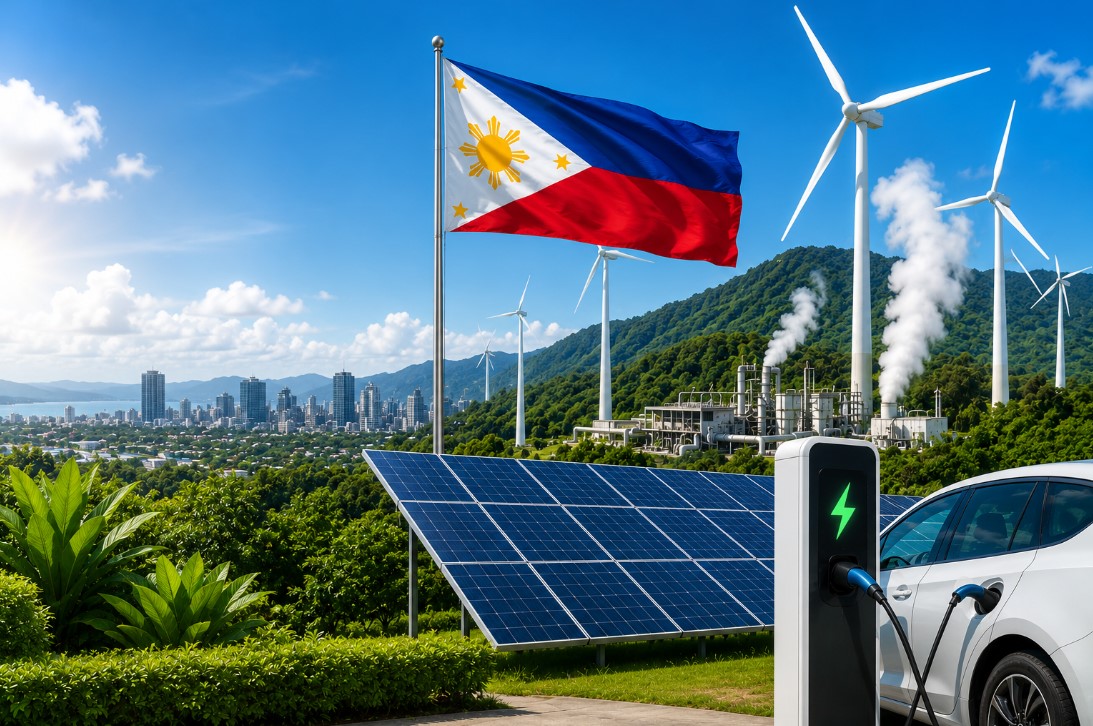
The World Bank has approved a $1.02 billion financing package to help the Philippines accelerate its renewable energy transition, expand domestic power generation and reduce its dependence on imported fossil fuels, the multilateral lender said.
The package comprises a $1 billion loan from the International Bank for Reconstruction and Development (IBRD) and a $20 million performance-based grant from the Livable Planet Fund.
The World Bank said it is among the largest IBRD operations approved in support of the Philippines’ development agenda.
The financing, under the Second Energy Transition and Climate Resilience Development Policy Loan, will support a series of policy reforms aimed at lowering electricity costs, improving energy security and attracting private investment into the country’s clean energy sector.
Among the key measures backed by the program are the full operationalization of the Renewable Energy Market, the integration of electric vehicle charging infrastructure into utility planning, and the launch of the Philippines’ first offshore wind auction, which targets contracting 3.3 gigawatts (GW) of capacity by 2030.
The World Bank said the reforms are expected to mobilize about $7 billion in private investment while expanding the country’s domestic renewable energy capacity and creating new jobs.
“The Philippines has everything it needs to power itself at lower cost—wind along its coasts, sunlight year-round, and geothermal energy beneath its soil,” World Bank Division Director for the Philippines Zafer Mustafaoglu said in a statement.
“This operation helps turn those natural advantages into reliable, affordable electricity for Filipino families and businesses. At a time when global energy markets are deeply volatile, this development policy loan helps the Philippines take control of its own energy future, support growth, and create jobs,” he said.
The lender said persistently high and volatile electricity prices continue to weigh on Philippine households, businesses and economic competitiveness.
By reducing reliance on imported fossil fuels and accelerating investment in locally available renewable energy resources, the reforms are expected to shield the country from global fuel price swings and improve long-term energy affordability.
The Philippines aims to increase the share of renewable energy in its installed power generation capacity to 42% by 2027 from around 30% currently, as part of its strategy to diversify the energy mix and strengthen energy security.
Beyond energy, the financing package also supports reforms in the country’s fragmented water sector, where more than 1,600 local government units are responsible for water service delivery but often face financial and institutional constraints.
The program will back the implementation of cost-recovery tariff frameworks, a unified financing system prioritizing poor and climate-vulnerable communities, and bulk water pricing regulations.
These reforms aim to increase the number of local water service providers operating under sustainable business plans from 10 to 100 by 2027, improving water security nationwide.
The World Bank said the combined energy and water reforms are intended to strengthen the Philippines’ climate resilience while encouraging greater private sector participation in infrastructure development.
